
For the media center
Cranium CoRE for school librarians and media specialists
Cranium CoRE was shaped by librarians before it was ever sold to a school. Its founder came out of school library automation, its earliest champions were media specialists and state library association presidents, and its biggest use case - Battle of the Books - lives in your room. Cranium CoRE is a reading motivation program for grades 5-12 that runs from one browser tab in the media center: read-alouds, book clubs, class visits, Battle of the Books practice, and school-versus-school battles, all on a library of 7,000+ games on 1,875 books that your students can add to.
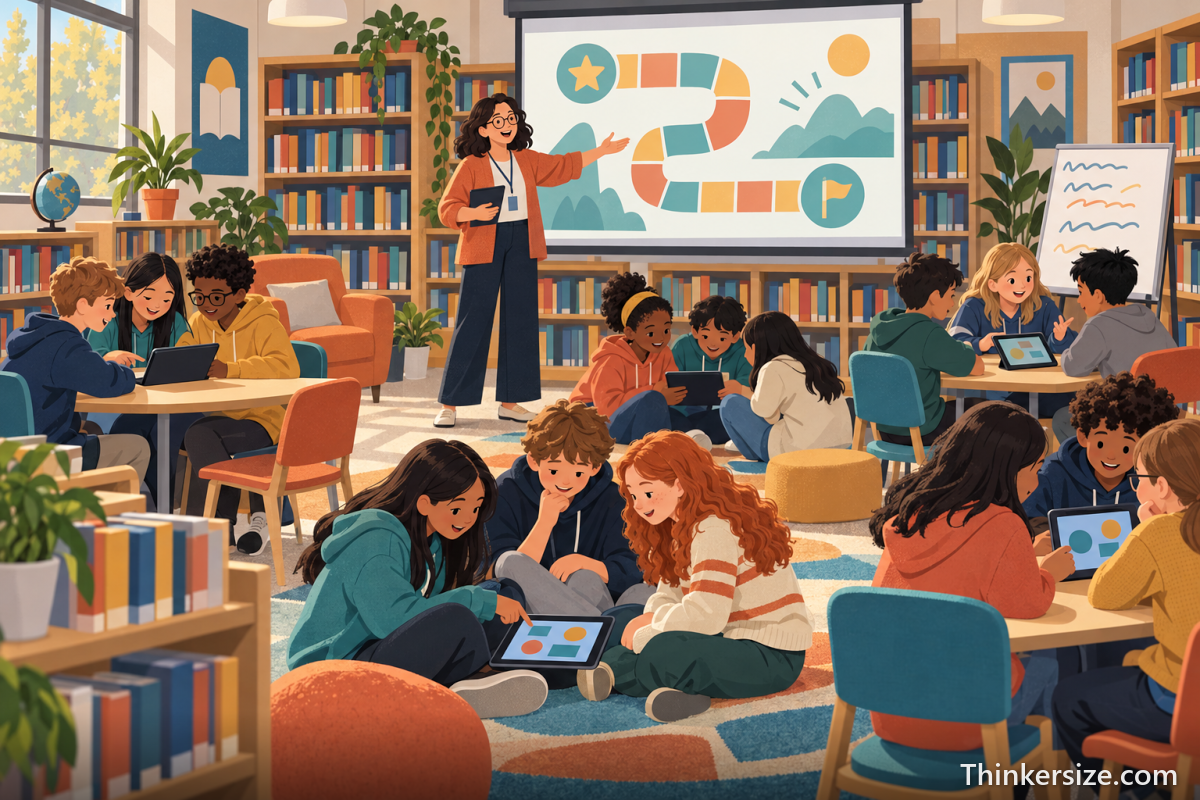
The library as the game show studio
Every class that comes through your doors can play. A visiting sixth-grade class reads a chapter of Wonder aloud with you, splits into teams of three, plays a round on the projector, and defends its answers from the book before the bell. The teacher leaves with a discussion routine she can run in her own room, and the book leaves with a waiting list.
Because students never log in, there is no roster to build and no accounts to manage. A team types a team name and plays. You can host a class you have never met.
Battle of the Books, from first list to final round
Cranium CoRE is Battle of the Books software built by a host. Teams of three, one device per team, one minute and three attempts per question, points for being right instead of first, and a discuss-and-defend round where the close calls get settled with the book open. Practice all season on community-built sets or on games your students write for this year's list, then run the battle in your media center or against another school at the same grade: you host the game show and screenshare it over a video call, and the other school's team watches the screenshare and answers on its own device.

Read-aloud is the front door
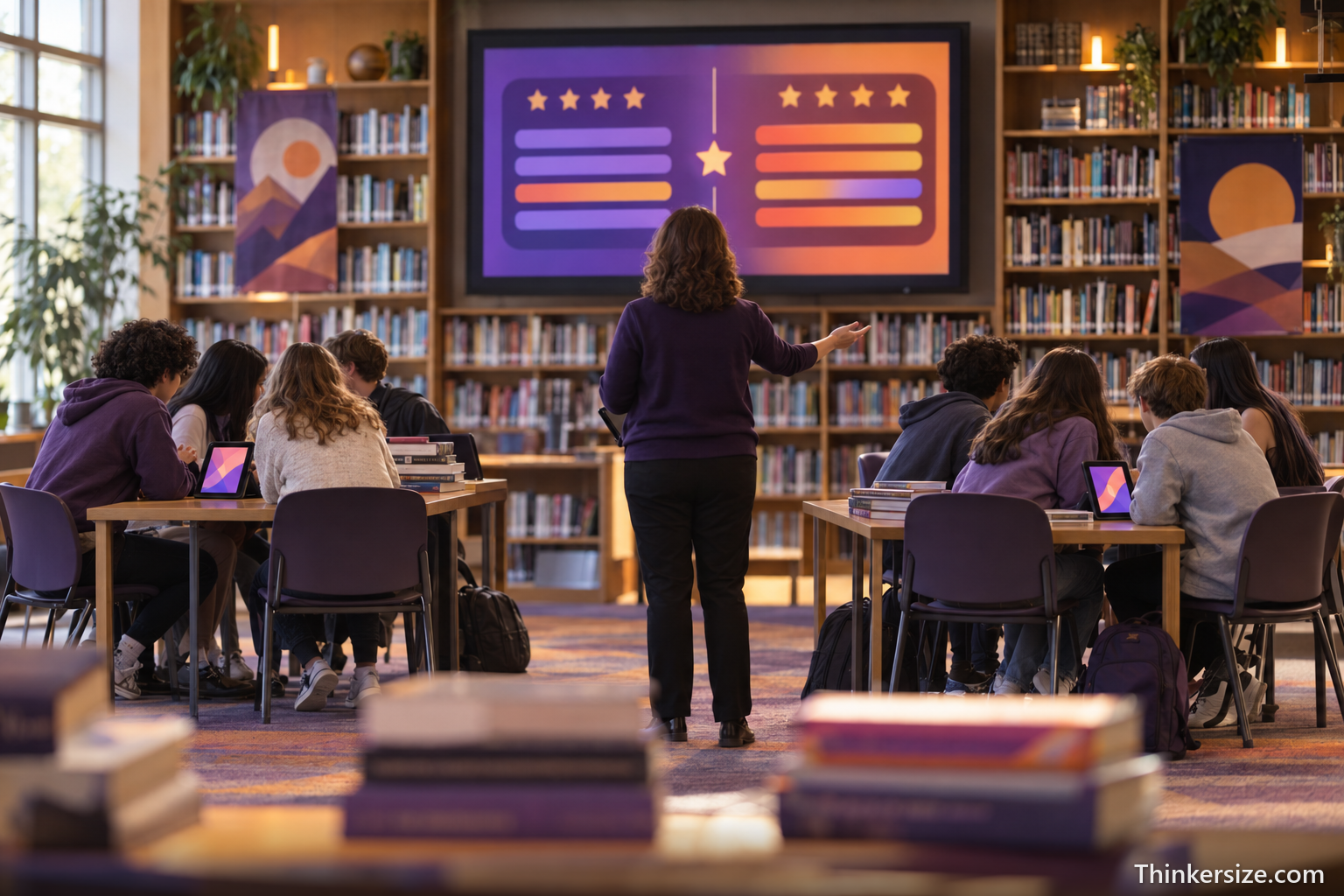
Cranium CoRE's method starts with a read-aloud for a reason. In 1997, Jim Trelease - author of The Read-Aloud Handbook - told Andy Larson that asking students to finish a whole novel before playing would lose the reluctant readers he most wanted. Read one chapter aloud, Trelease said, then play. Students comprehend about two years above their reading level when they listen, so a read-aloud puts a mixed-ability group on equal footing for the questions that follow. Twenty-five years later that is still step one, and it is a step the library does better than anyone.
Programs you can run this month
Class visits with a purpose
Pick the title the class is reading, play one round, send them back with a discussion habit.
Lunch or after-school book club
Teams of three, one chapter a week, students write next week's questions.
Cross-grade mentoring
High school speech and debate students read aloud and host games for a feeder middle school on books they wrote questions for. The older students model elocution and finding evidence fast; the younger ones see where this goes.
Author visits
Play a game on the author's book the week before. Students arrive with questions that are actually about the text. Authors Shelley Fraser Mickle and Tim Green (Football Genius) have seen their books through Cranium CoRE and liked what it did.
Intervention and RtI support
Media specialists use Cranium CoRE with at-risk readers because it holds the attention of students who have tuned out everything else. It is not an assessment tool; it is the engagement that makes the intervention possible.
What librarians say
"For most children reading is hard and writing is even harder. This TV game show format within the Cranium CoRE methods offers an exciting environment that motivates children of any age to read so they can participate in this fun filled event. I highly endorse it as a way to encourage children to read and write."
"His Cranium CoRE vision launches a reading initiative that can attract children with all levels of reading capability. He uses a very familiar format, a quiz show, allowing them to fit the questions to their experience. This is going to be a superb reading motivation program."
Built with AASL standards in mind
Cranium CoRE's per-grade alignment documents reference both the state ELA standards for grades 5-12 and the AASL Standards for the 21st-Century Learner, so your program maps to the same documents your evaluators use. Andy also runs sessions for media specialists and library staff on higher-level thinking through play, technology, and books.
Climbing Bloom's Taxonomy, not camping at the bottom
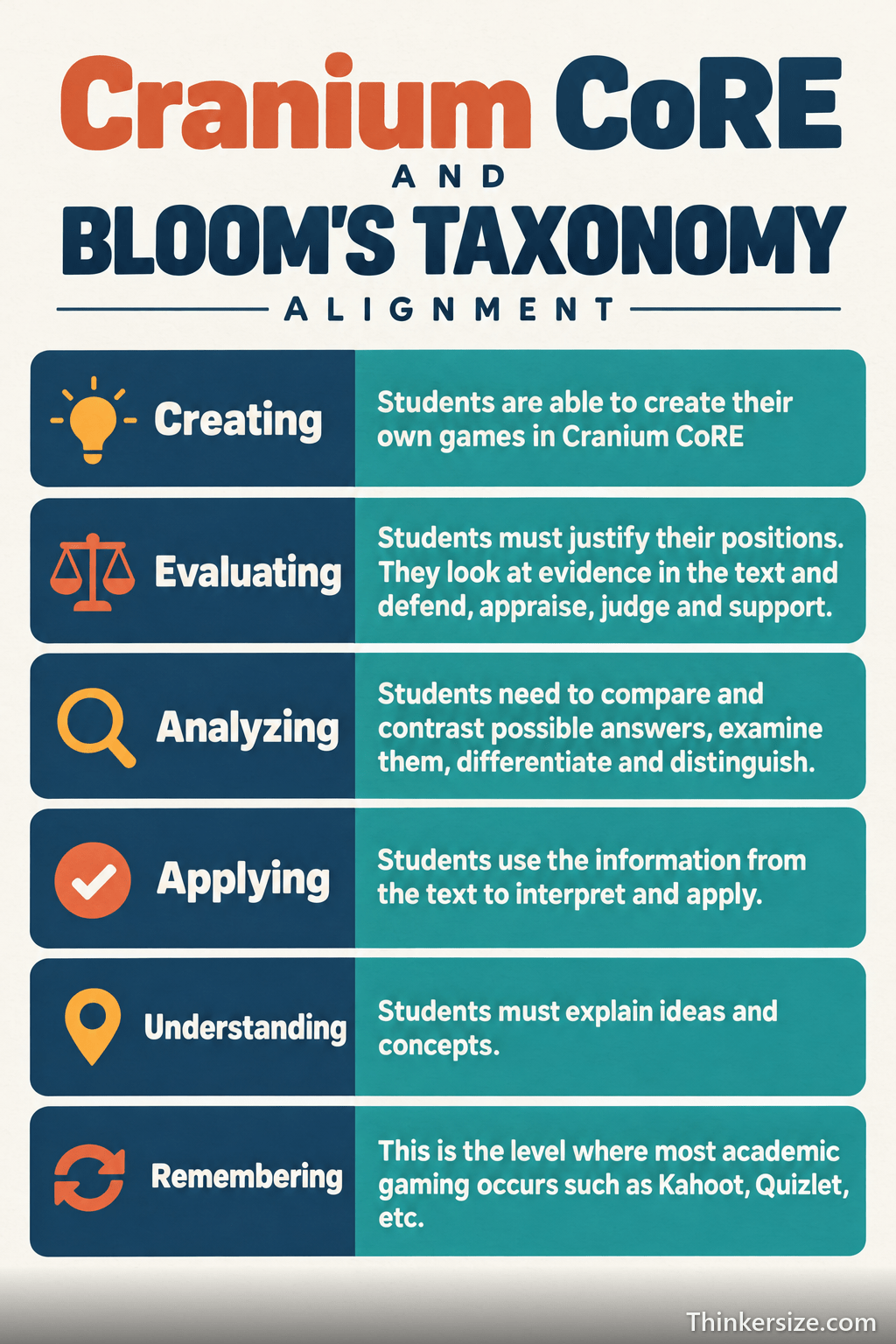
Most academic gaming - the quiz apps students already know - happens at the Remembering level. A Cranium CoRE round asks for more at every step up the taxonomy:
- Understanding. Students explain ideas and concepts from the chapter.
- Applying. Teams use information from the text to interpret and apply it.
- Analyzing. Teams compare and contrast possible answers, examine them, differentiate, and distinguish.
- Evaluating. Every team justifies its position with evidence from the text - defending, appraising, judging, and supporting.
- Creating. Students write their own games, which is where your book club becomes the author of the next round.
Text version
Cranium CoRE and Bloom's Taxonomy Alignment
- Creating - Students are able to create their own games in Cranium CoRE.
- Evaluating - Students must justify their positions. They look at evidence in the text and defend, appraise, judge and support.
- Analyzing - Students need to compare and contrast possible answers, examine them, differentiate and distinguish.
- Applying - Students use the information from the text to interpret and apply.
- Understanding - Students must explain ideas and concepts.
- Remembering - This is the level where most academic gaming occurs, such as Kahoot, Quizlet, etc.
Frequently asked questions
Do I need a roster or student accounts?
No. Students do not log in. A team enters a team name and plays. You can host a class you have never met and a battle between schools with no account setup on the student side.
How many books are in the library?
1,875 titles with games, including Holes, Hatchet, Wonder, The Giver, Esperanza Rising, and The Lightning Thief, plus community-built Battle of the Books sets. Premium members add new games every day.
Can the whole school use my license?
Yes. A license is per school, per year, with unlimited member accounts for that building. Give every teacher a sub-account.
What does the library need?
One computer on a projector or large display, strong Wi-Fi, and one phone, tablet, or Chromebook per team. Nothing to install.
Why do some titles only have games for a chapter or two?
Two reasons. Some sets were written for a demo day, when a school handed Andy one segment of a book to play with a class. Others are deliberate head starts: the first chapter or two of a title so a school can start playing and add questions for the rest as it gets to them. The library has always been meant to grow through its members, and your students can be the ones who finish a title.
How often are new titles added?
Andy Larson writes new titles month by month, and every premium member school's games publish immediately, so the pace depends on the community - which includes your book club. If a title on your list is missing, your students can write it this week.
Can I host a game for a class whose teacher does not have an account?
Yes. The game runs from your account, and students never log in, so you can host any class that walks in. If your school is licensed, you can also give that teacher a sub-account afterward so the routine follows the class back to the room.
Can teams answer on the library's Chromebooks?
Yes. Any browser on a Chromebook, laptop, or netbook works as a team remote at remote.craniumcore.com; phones and tablets use the free Cranium CoRE Remote app. Each team enters the game code from your screen and a team name.