
The four-step method
Step 1: Read aloud, read along
A chapter is read aloud by the teacher or a student while everyone reads along. Listening comprehension runs roughly two years ahead of independent reading level, so a mixed-ability class gets the same shared text and the same shot at the questions. Occasional student read-alouds double as elocution practice.
Step 2: Play a TV-style game show
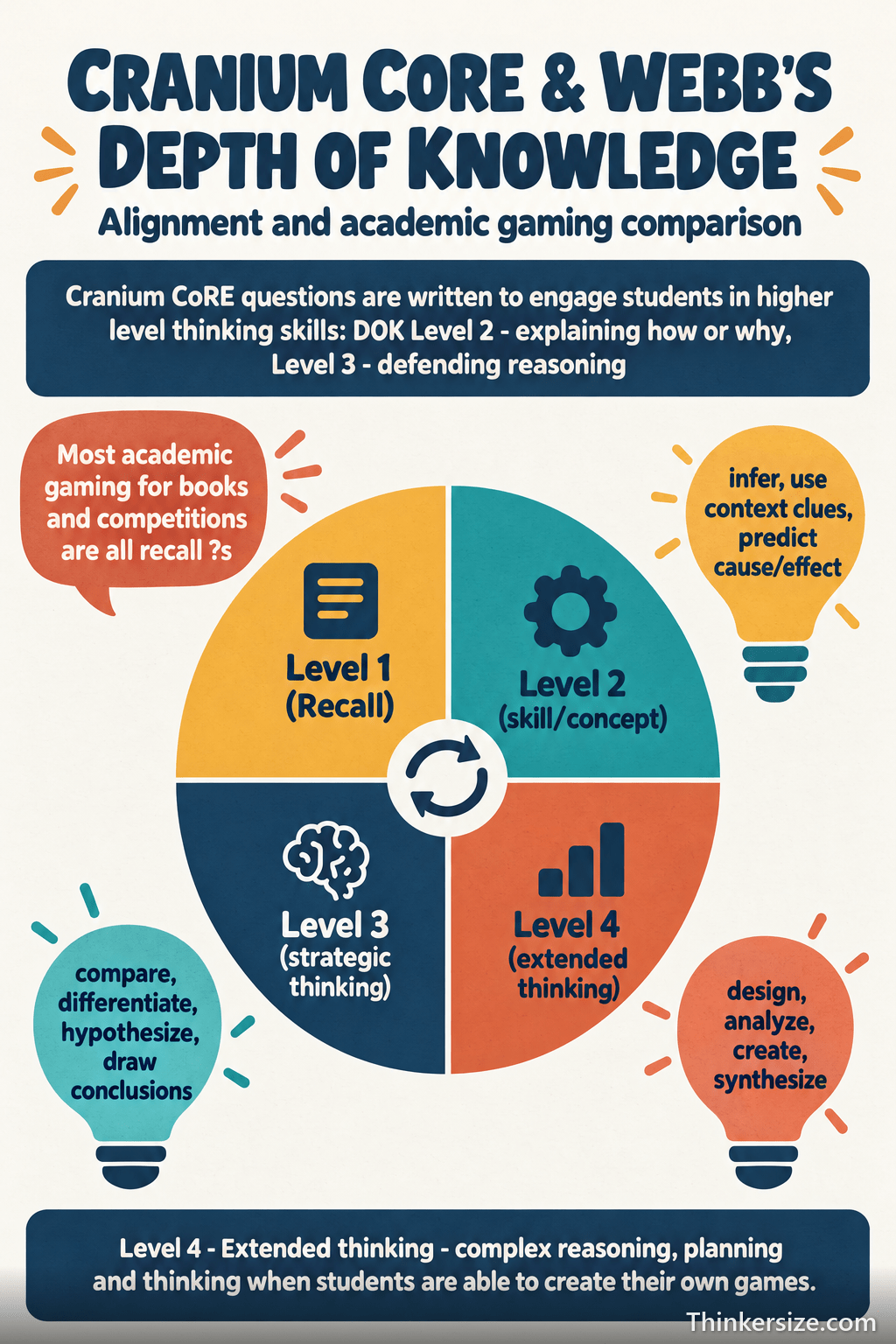
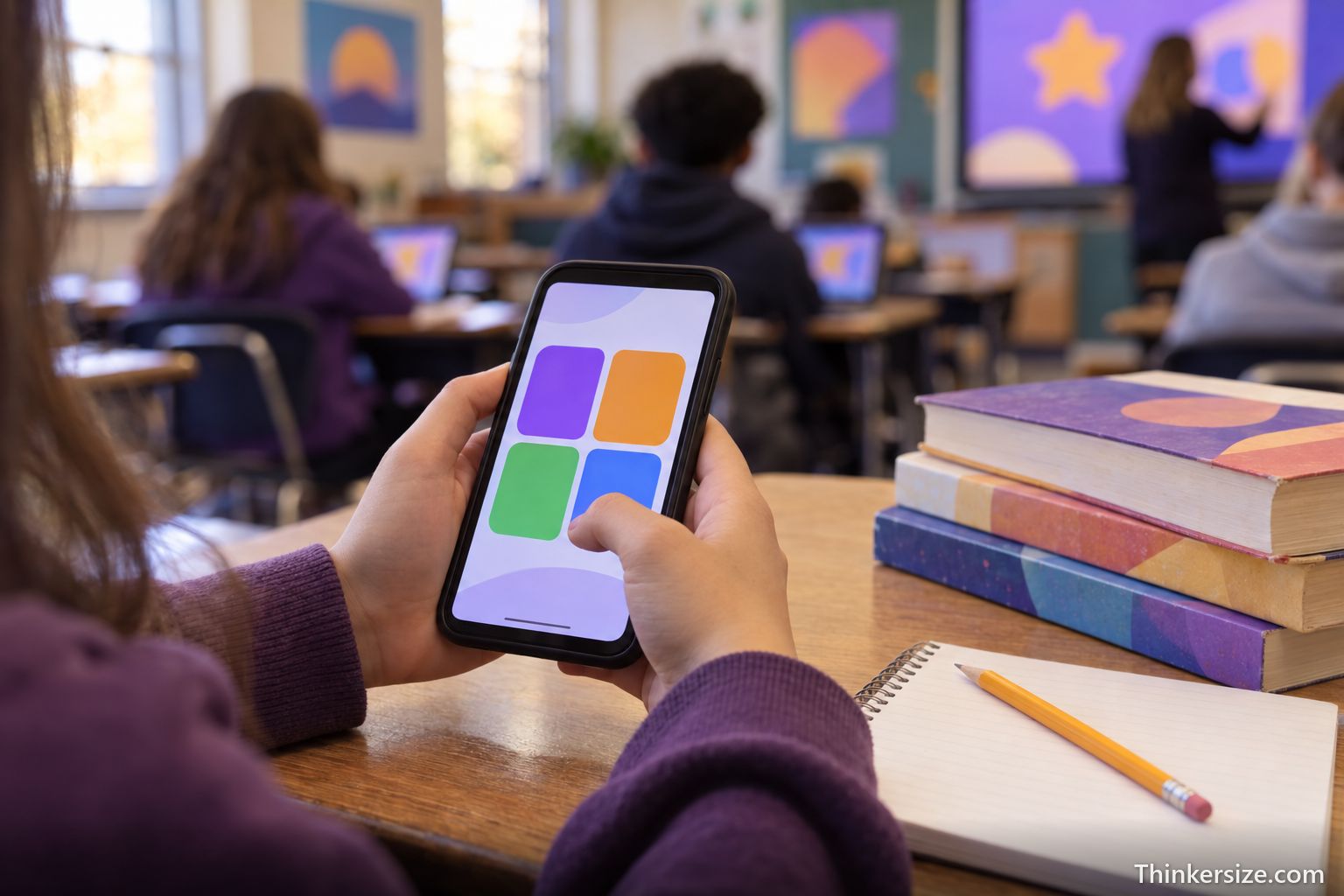
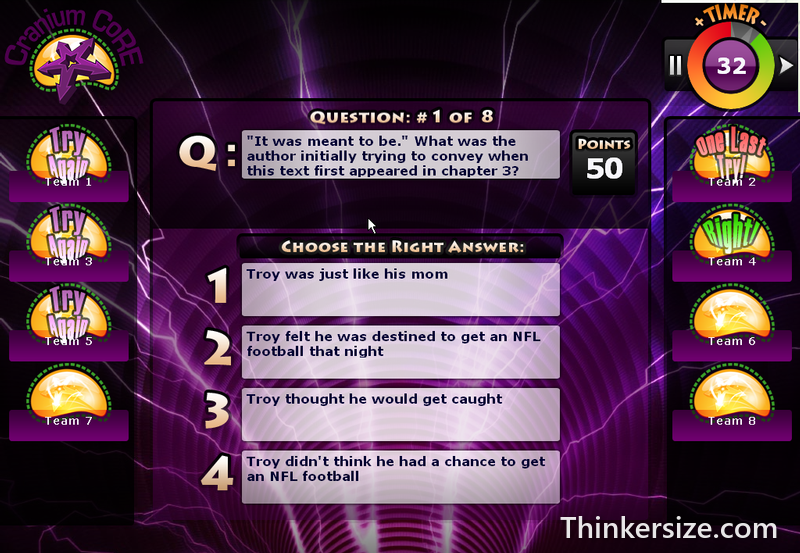
Teams answer on one shared device so the team has to talk before it taps. Question types are deliberately above recall: hypothetical, inferential, persuasive argument, compare and contrast, author's purpose, and sequencing. The host can pause at any time. Up to ten teams play at once.
Step 3: Discuss and defend
The round is open book by design. Teams prove their answer using the author's words and listen to the teams that chose differently. This is the metacognitive step, and it is where accountable talk, textual evidence, and inference stop being vocabulary words and start being habits.
Step 4: Compose your own questions
Students who have played want to write. Teams take the next chapter, write higher-order questions with the built-in question-writing tutorial, and play each other's games. Writing a question that only works if you understood the chapter is the clearest mastery check there is.